
Krishnasaar (Blackbuck) Conservation Area
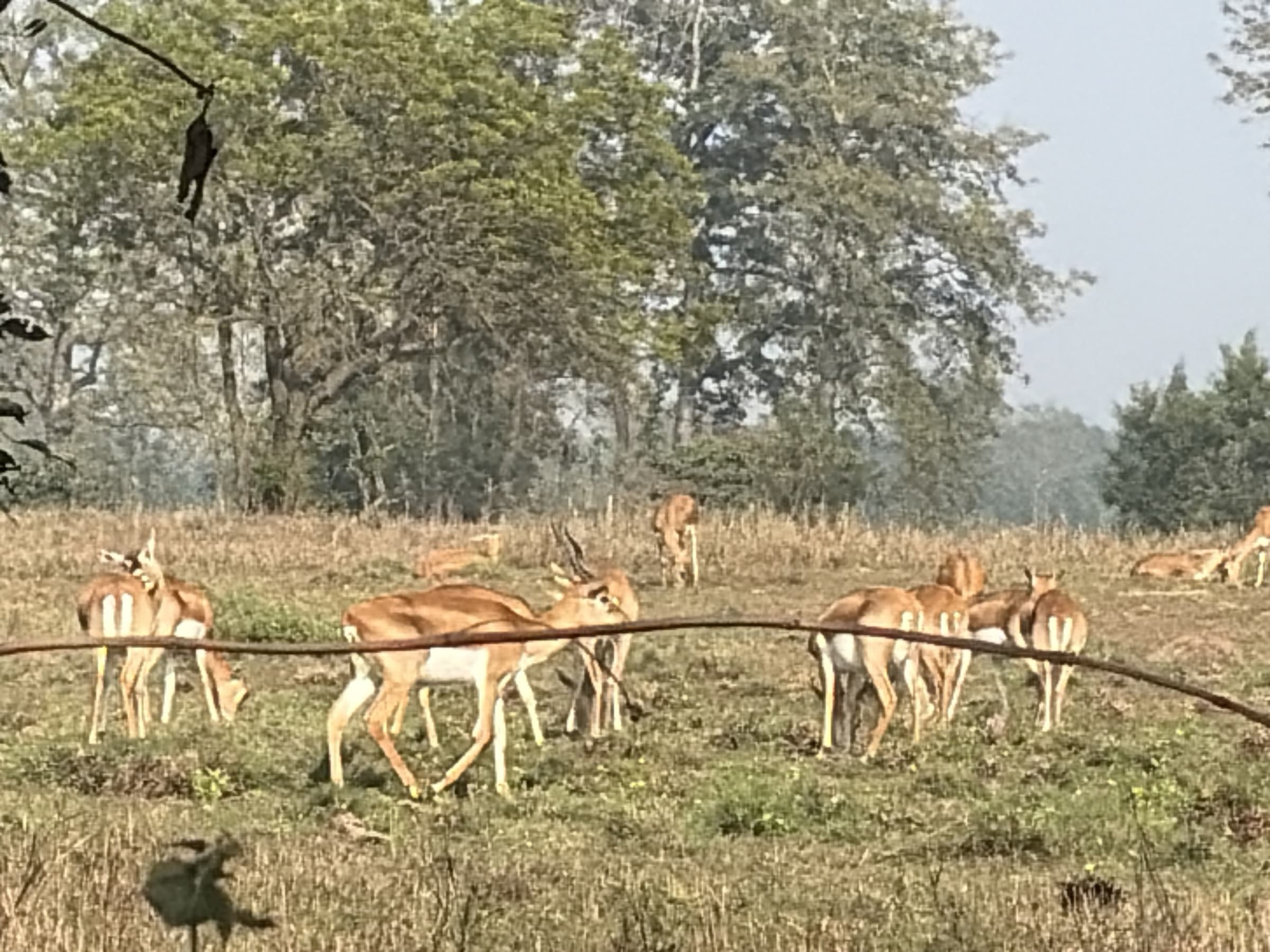
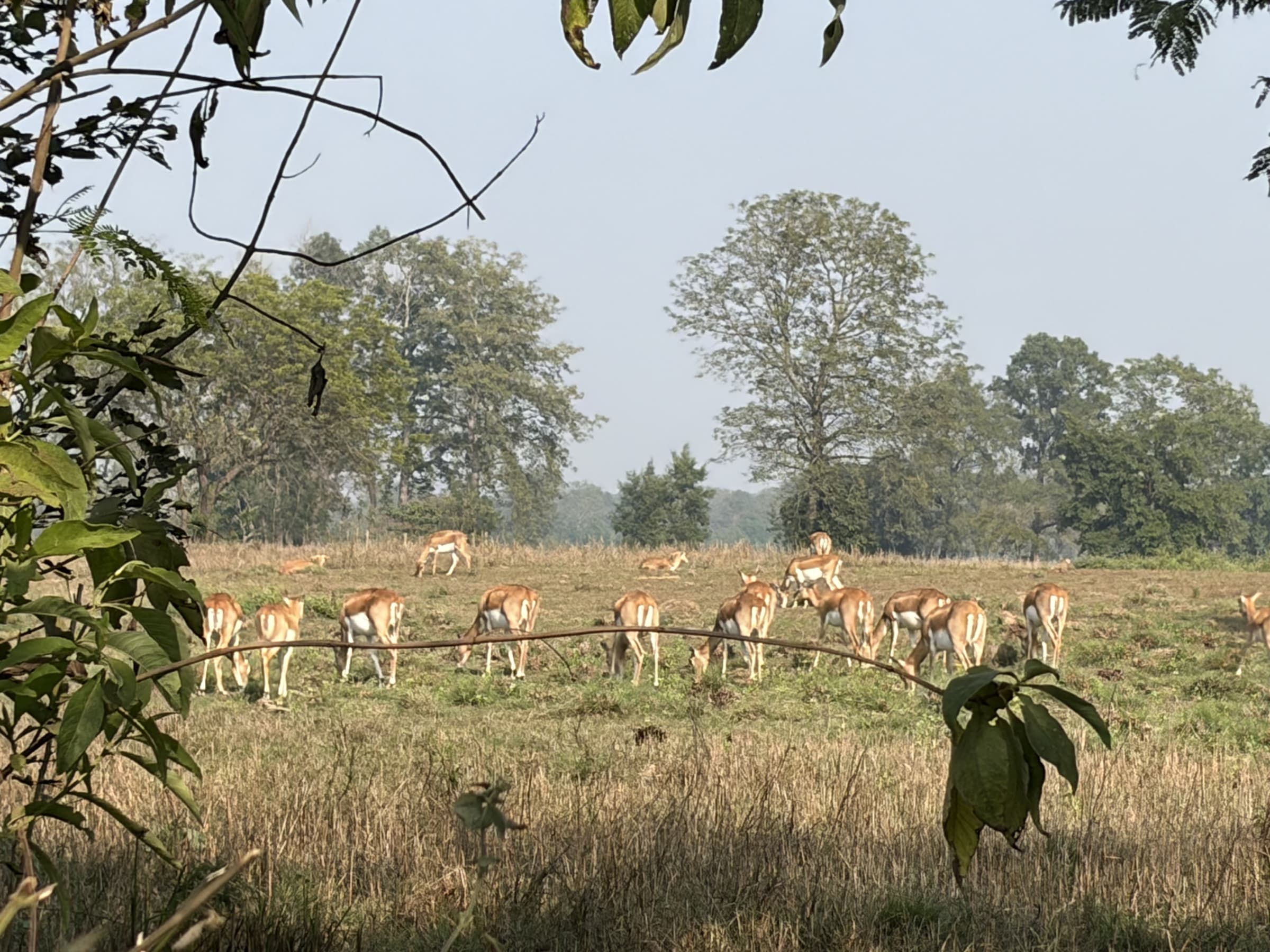
Nepal's only wild herd of blackbuck grazes on open grassland just 10 minutes from Bagaicha Eco Resort. Come at sunrise or late afternoon to watch these rare antelope graze, spar and sprint across the plain.
What it is
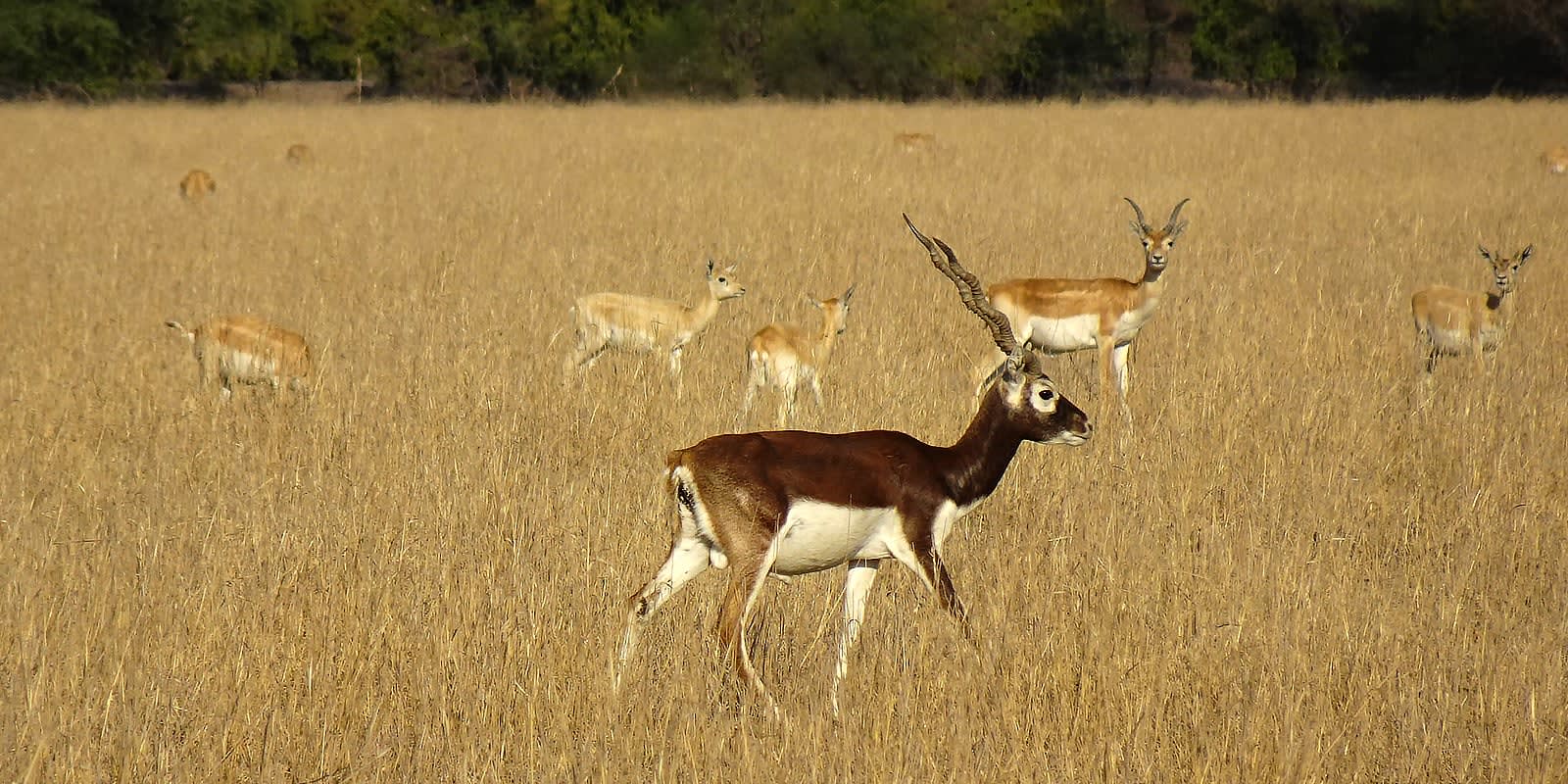
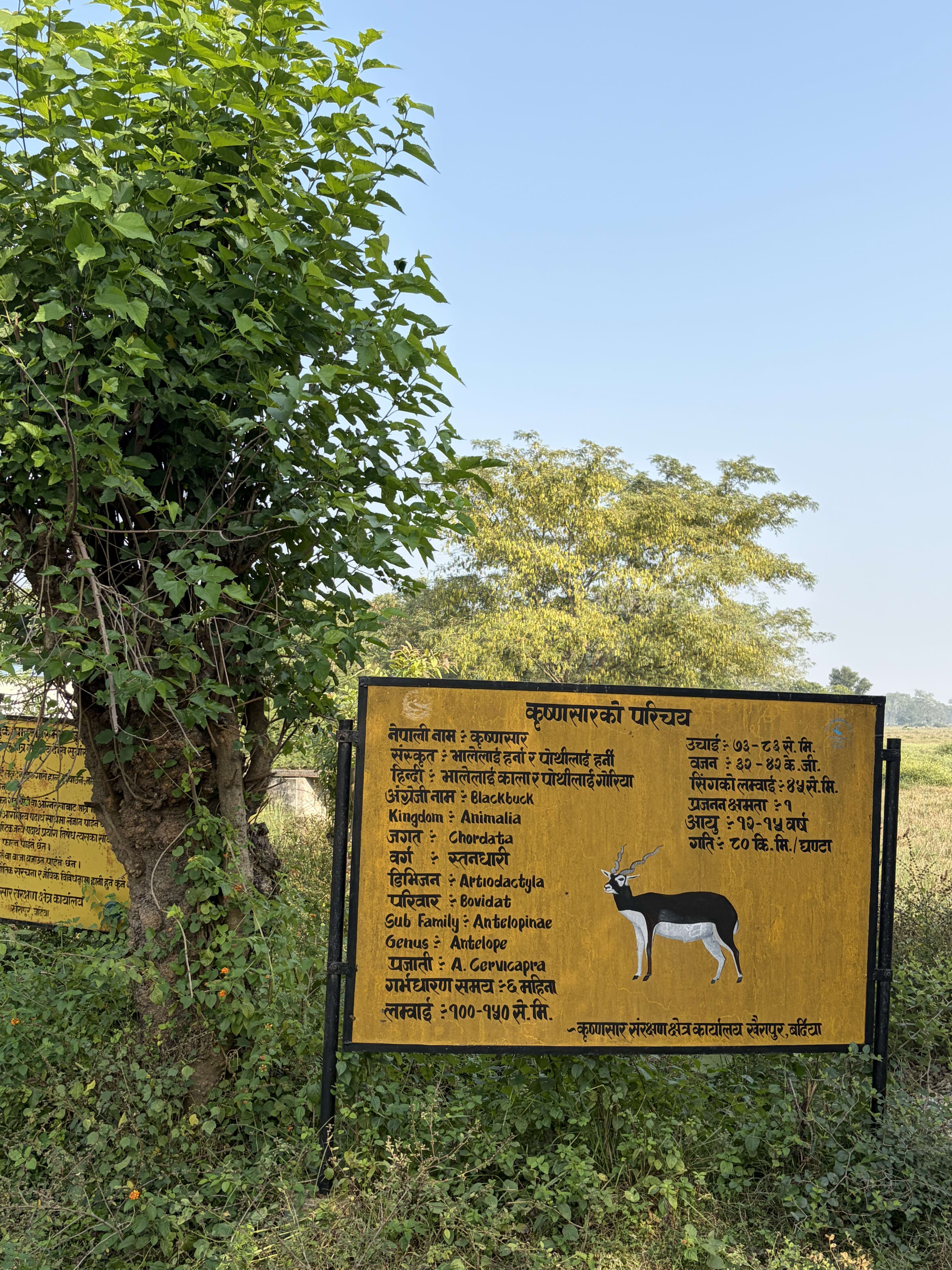
The Krishnasaar Conservation Area, also called the Blackbuck Conservation Area, is a protected grassland in Gulariya, Bardiya. It was set aside for one animal: the blackbuck, called krishnasaar in Nepali. It is the only place in Nepal where blackbuck live wild in their natural habitat.
The area is managed by Nepal's Department of National Parks and Wildlife Conservation. On paper it covers 16.95 sq km, but the herd lives in a smaller fenced core of open grass and scrub. That core is where you watch them.
It's very close to our resort. You can go in the cool early morning and be back in time for breakfast.
History and conservation
By the early 1970s the blackbuck was thought to be extinct in Nepal. Then in 1975 a herd of just nine animals was found at Khairapur, and a guard post went up that same year to protect them.
The herd grew to 177 by 1990. Then it fell again as its habitat was lost and disturbed. In March 2009 the government declared the Krishnasaar Conservation Area, and a 10 km fence was later built around the core grassland.
Today the herd numbers around 250. Blackbuck from here also helped start Nepal's second herd, at Shuklaphanta National Park. The threats haven't gone away: leopards, hyenas and jackals prey on the herd, Babai River floods have killed dozens, and encroachment has shrunk the grazing land. Your entry fee goes toward protecting them.
Wildlife and best season
Adult males are dark brown to almost black, with white eye rings and long spiralled horns. Females and young are tan and have no horns. Most of the herd is females and fawns, so spotting a mature buck is part of the fun.
The mating season peaks around February and March. That's when the bucks are at their darkest and you may see them chase each other and show off. You can see fawns for much of the year. The open grassland is good for birdwatching too, so bring binoculars.
October to April is the best time, when it's dry and cool. Come in February or March if you want to see bucks displaying. Go in the early morning or late afternoon, when the herd is most active and the light is best for photos. The monsoon (June to September) brings heat, mud and the risk of flooding, and the late-spring midday heat is harsh.
Getting there
The conservation area is just 10 minutes from Bagaicha Eco Resort in Khairi, Gulariya, and we're the closest place to stay. There are no hotels, homestays or restaurants inside the area, so most visitors make it a short trip from a nearby base. Pay the entry fee at the conservation area office when you arrive. If you're flying in, Nepalgunj airport is the nearest.
Blackbuck / Krishnasaar Conservation Area: ~5 km · 10–15 mins
What to bring
Binoculars and a camera with a zoom lens Clothes in neutral colours, plus a hat and sunscreen Drinking water and snacks (nothing is sold inside) A warm layer for foggy winter mornings Closed shoes Cash in rupees for the entry fee, and ID or a passport (the fee depends on your nationality)
Photographs
Nearby attractions
Nepalgunj
~40 km · 53 mins
Bardiya National Park / Thakurdwara
~30 km · 50 mins
Karnali Bridge
~53 km · 75 mins
More ideas for your stay on our Explore page and the location page.
Questions and answers
- What is the best time to visit?
October to April, in the early morning or late afternoon. February and March are best for seeing dark-coated bucks displaying.
- How do I get there from the resort?
It's about a 10-minute drive. Ask at reception and we'll help you arrange it.
- Do I need a guide or a permit?
You don't need a separate permit, just an entry ticket bought on site. In 2025 it cost Rs 2,000 for foreigners, Rs 500 for SAARC nationals and Rs 100 for Nepalis. Fees can change.
- What should I bring?
Binoculars, a zoom camera, water, sun protection, and rupees for the entry fee. There are no shops or cafés inside.
- Can children visit?
Yes. The ground is flat and easy to walk, and the animals are watched from a distance. Keep children close and quiet so the herd isn't disturbed.
Visit Krishnasaar from Bagaicha
Stay in Gulariya, in the heart of Bardiya, and plan your visit with us.